
NEW U.S. NUTRITION GUIDELINES INTRODUCE AN INVERTED PYRAMID
The U.S. Department of Health and Human Services (HHS) and […]
Read more
Dementia is the leading cause of disability and dependency among older adults worldwide. According to WHO estimates, its prevalence could triple by 2050, with Alzheimer’s disease being the most common cause. Current therapies provide only symptomatic relief and have limited long-term efficacy.
In this context, early action – particularly during the preclinical stages of cognitive decline – is essential. Multidimensional, preventive strategies may offer a more effective way to protect cognitive health before irreversible damage occurs.
This is the approach explored in the PENSA study, a clinical trial jointly led by the Hospital del Mar Research Institute and the Barcelona βeta Brain Research Center (part of the Pasqual Maragall Foundation), recently published in The Journal of Prevention of Alzheimer’s Disease.
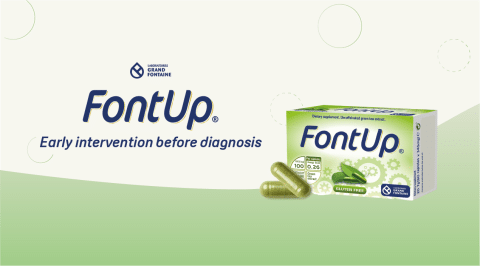
The study shows that combining a structured lifestyle intervention with FontUp (madre from epigallocatechin-3-gallate (EGCG), a natural compound found in green tea) provides sustained cognitive benefits in individuals with Subjective Cognitive Decline (SCD) who also carry a high genetic risk of developing Alzheimer’s disease.
Key findings of the PENSA study include:
These findings highlight the potential of integrative lifestyle and nutritional strategies in the fight against dementia and mark an important step toward effective early prevention.

References:
Forcano L, Soldevila-Domenech N, Boronat A, Sánchez-Benavides G, Puig-Pijoan A, Lorenzo T, et al. A multimodal lifestyle intervention complemented with epigallocatechin gallate to prevent cognitive decline in APOE-ɛ4 carriers with Subjective Cognitive Decline: a randomized, double-blinded clinical trial (PENSA study). J Prev Alzheimers Dis. 2025;(100271):100271.
The U.S. Department of Health and Human Services (HHS) and […]
Read more
Promoting lifelong brain care through shared responsibility and preventive approaches […]
Read more
Engaging physicians in the role of FontUp® and early intervention […]
Read more